As I prepared for my PCT attempt in 2018 as a middle aged hiker, I knew that the odds were against me. With a near 90% failure rate, I would have to figure out ways to improve my odds. I studied the trail. I tested out different brands of shoes. I read books on the proper care of my feet. As astronaut Mark Watnay in the book The Martian by Andy Weir said,
In the face of overwhelming odds, I’m left with only one option. I’m gonna have to science the shit out of this.
I spent much time planning out how I was going to see on trail. For the PCT, I wore thirty-day continuous wear contacts. They were great. While on trail, I would go to sleep with them still on. When I woke up, I could see. I carried a spare pair on contacts and a very small bottle of solution and my daughter would sent a new pair with my shoes. I also carried a pair of glasses as a backup until I reached Big Bear when I realized that my glasses were no longer a need, but a fear. If I lost a contact, I had a spare with me. If I managed to loose the spare, honestly, my vision is good enough that I could follow the clearly marked trail.
When my wife and I walked the Camino in July, I wore my last pair of bifocal contacts. In real life, I wear glasses pretty much exclusively now. This past trip taught me that I cannot read while wearing contacts unless I have reading glasses. So, continuous wear contacts are not an option anymore. I’ll be depending upon the FarOut app to keep me on trail. I need to be able to read my phone.
It wasn’t as big of a deal on the Camino. We slept in a bed every night. I would take out my contacts and read just fine. On the AT, while on trail, the last thing I want to do is put my dirty fingers in my eyes at night. I also know that there will be moments when I want the safety of contacts over glasses. There will be climbing up mountains on my hands and knees. I might want to go rafting on a side trip. I need to figure out a compromise.
What I’ve decided to do is carry a couple cheap pairs of daily wear contacts for the rough and tumble hiking and wear my glasses most of the time. I’ll need to carry two pairs of glasses, regular and sunglasses. To keep them on if I take a tumble, I bought some cheap sport straps and I’ll carry a tiny repair kit.
Simple enough, but there is a cascade effect to this decision. Like I said, I feel I was successful on the PCT, because I spent time thinking about the details. Not only do I spend time thinking about what I’m going to carry, but also where I’m going to carry it. I’ll need two pairs of glasses if they are prescription glasses, I want easy access to them.
When you carry only the things you need, you cannot afford to loose anything. I cringe when I see thru-hikers carrying their Sawyer Squeeze screwed on a one-liter bottle. I want everything tucked away. I also want to make sure that when I pack up for the day, everything has its place, and if that place has a zipper, the zipper is closed. On the PCT, I lost just two pieces of equipment. I lost my emergency whistle early on. I lost my buff walking home from the laundry in Cascade Locks. That was it.
The ULA Catalyst has two large hip belt pockets. I bought an extra shoulder pocket when I bought the pack. Those three locations carried anything I wanted access to without stopping.
The shoulder pocket is where I kept my phone. In the left hip belt I kept my snacks for the day. In the right hip belt I kept those other things I wanted quick access to. I kept my lip balm, hand sanitizer, DEET, headlamp, mosquito netting and my Rock of Faith.
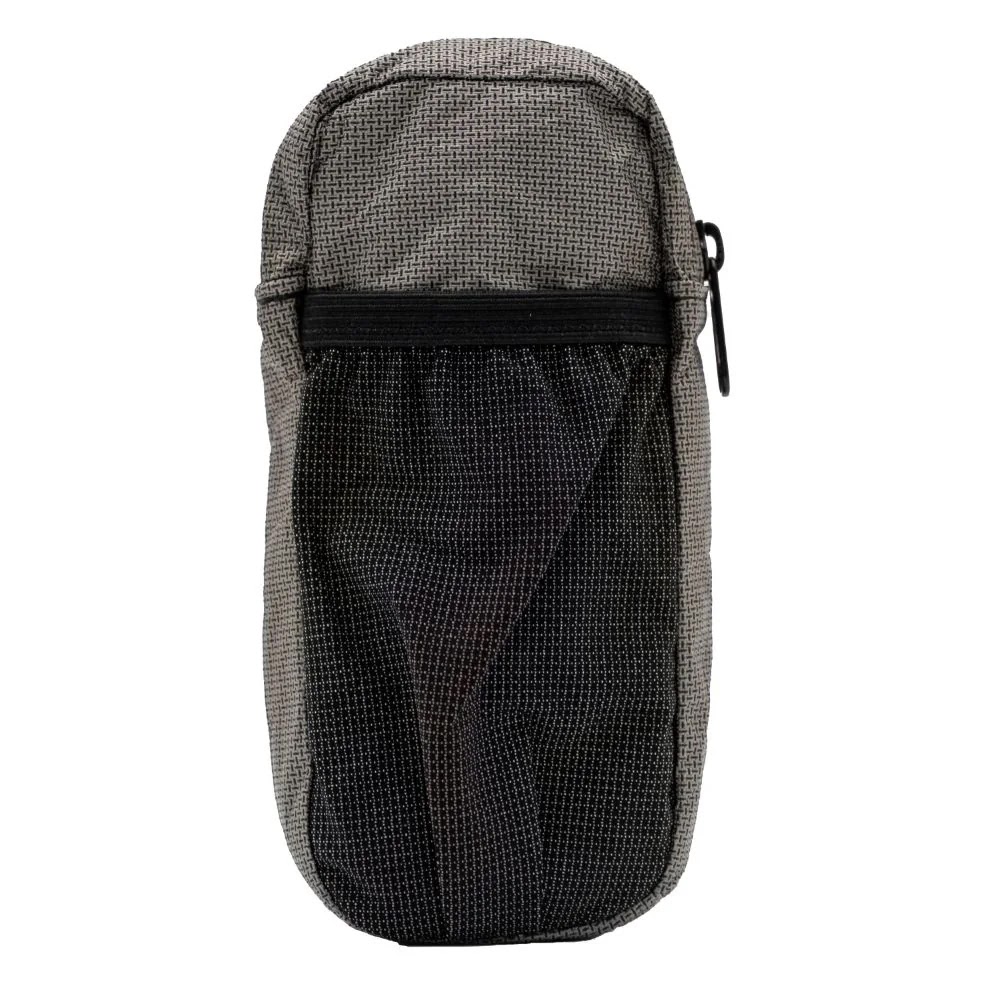
On the Camino, I didn’t need to carry snacks. We also started hiking at the break of dawn. Also, my phone has become larger over time and doesn’t fit well in the shoulder pocket. So, the left hip belt became my phone pocket and I kept my sunglasses in the shoulder pocket. On the AT, I’ll want my snack pocket back, so I need more storage, so I bought a new ULA shoulder pocket. It is much improved from the one I bought with the pack.
The new version is bigger and has a mesh compartment. It will become the new home for my phone and the old shoulder pocket will hold whatever glasses I’m not wearing. Problem solved.
I know what you are thinking. A whole article on pockets? Absolutely!
You would think that this is no big deal, but that isn’t true. I learned that I could cut the amount of time it took to pack up camp by nearly fifteen minutes with the simple act of carrying my toothbrush and toothpaste in a baggy in the mesh portion of my pack instead of with my food bag. Toothpaste needs to be hung from bears, so the best place to keep it is your food bag. You store you food bag in the pack. You cannot close your pack until everything is packed. Brushing your teeth is usually the last thing you do before start walking.
I remember the eureka moment when I realized that if I kept my toothbrush and toothpaste outside my pack, I could be completely ready with my pack almost completely packed. That made a huge difference when it is cold and rainy!
Sometimes it is the little things, and when you’re out in the middle of nowhere, days from civilization, it is better to think this all through before you get there. Now I have a new mesh pocket? What am I going to keep there?