I have narrowed down the hike so that I will be starting at Martin Street and hiking north. When I get to Grand Marais I will be transported to the Northern Terminus. From there, I will hike back to Grand Marais. Exactly how I’ll arrange transportation is yet to be determined. Once I return to Grand Marais, my friend Terry will pick me up and take me to my car. The advantage to this route is that I will have the easier Duluth to Two Harbors section to get my hiking legs in order.
So, with that all figured out, it is time to put together a resupply plan. Fortunately, this will be way easier than the PCT.
For the PCT, I planned out thirty-two resupply points! That process was extremely complex. On the PCT, there were two types of resupply points, full-service and send a box. At full service towns I would buy my food at the local grocery store. If I had a place I needed to send a box, I would do it from there. To pull this all off, I researched each and every single town to determine what services were available. I used that strategy for all of California and Oregon.
Washington was a completely different beast. None of the town stops had a grocery store. Instead, my daughter served as my Quartermaster and shipped boxes from home. I had resupply down to a science before I reached Washington. I could easily calculate how long it would take me to complete a section. My daughter and I worked out the plan by phone and made our notes using Google Sheets.
The SHT is much simpler. I have six main resupply towns. All but one are close to the trail, and the one that is not is still easy walking distance. Food will be the heaviest item I will be carrying, so the more stops I make actually means the faster I go.
Here is the trick about resupplying. Sending a box to the Post Office is the easiest. All trail Post Offices know how to help hikers. The only issue is that the Post Office needs to be open for you to resupply. If you miscalculate you’ll be delayed for a couple of days.
Another option is local businesses. Some businesses support hikers by accepting packages, sometimes for a fee. The advantage is that local businesses have better hours. Paying $10 for someone to hold your package is much cheaper than a night in a hotel. I had great success using local business on the PCT. It is a much more flexible option.
Another choice is to completely forego sending boxes and visit the local grocery store. Hikers have created a menagerie of exotic hiker recipes like the Ramen Bomb. I’ve tried eating like that, but all I get is heartburn. The local grocery is a much better choice for fresh foods, however.
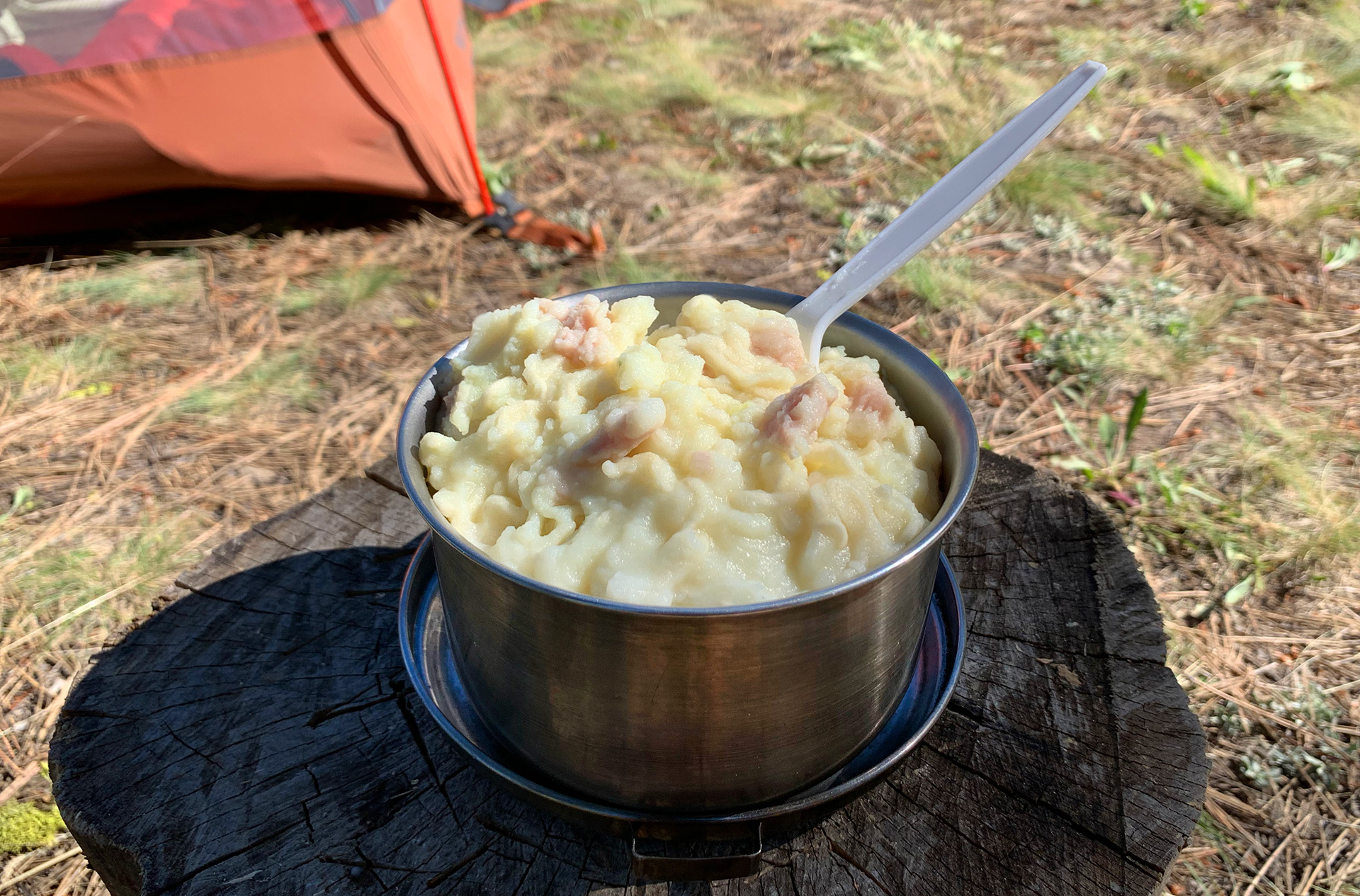
I’ve decided to split things up a bit. I will send three resupply boxes. In those boxes I will have my freeze dried dinners and a couple of items that I can only get at home. The dinners are light, so I do not mind carrying a couple of extra days of them. I’ll then shop locally for breakfast and lunch.
I’ve determined the best locations will be Two Harbors, Finland and Grand Marais. I’ll contact local businesses on the SHT website and see if they are accepting packages. I’m also ordering my dinners. They are much cheaper when you buy them in bulk.
It is good to have a plan.