I love the thru-hiking community. It is a diverse community with a wide range of backgrounds. Each and every person has their reasons why they pack a small number of necessities into a backpack and go spend four-to-five months out in nature. Living out in nature is a very unorthodox life.
That being said, it is also a community that has its own orthodoxy. For example, there is a belief that you cannot say that you have thru-hiked a trail unless you walk every single mile. I always found this one rather silly. If that is the case, then no one has thru-hiked the PCT legally since 2013. A portion of the trail was closed to preserve a nearly extinct toad and no one is allowed to hike that portion. Some do illegally, but walking on preserved land is also strictly against the Leave No Trace code. I have always taken the stance that one hikes the trail that is in front of you. If what is in front of you is dangerous, then you must reroute — and that is okay.
The walk every step orthodoxy is very much alive on the AT. Fortunately, as the senior trail, she is well established and one can actually do it. That is for another discussion. What I want to talk about is whether one should carry a bear canister the entire hike.
When I thru-hiked the PCT, there were two areas where one had to carry a bear canister. The longest part of the trail was the Sierra Mountains. Normally that means shipping your bear canister to Kennedy Meadows South (mile 703.4) and sending it home at Kennedy Meadows North (mile 1018.1). Yes, there are two Kennedy Meadows in California. It was very annoying to see ultralight backpackers with their tiny packs zooming without a bear canister.
One of the core principles of Leave No Trace (LNT) is to Respect Wildlife. If you are hiking through an area where an animal lives, you should nature alone. Nature provides balance. There is just enough food for the creatures that live there. Don’t tamper with it. Eating the berries that are meant for the local prey animals can put nature out of balance. We carry our own food and are not in a survival situation.
The black bears spend the summer and fall foraging for calories so that they have enough fat reserves for the winter. Because of that, nature has tuned their tastes towards desiring calorie dense foods Who has an ample supply of calorie dense foods? Why, humans do! So, it is critical that bears do not taste human food lest they associate humans with calorie dense food. Once that happens, it means that park rangers will have no other choice than to kill the bear.
In my opinion, killing a perfectly healthy bear because they discovered that they like Cheez-Its is morally wrong. I don’t judge the park ranger. I blame the visitor walking through carelessly and not properly storing their food so the bears can’t reach it.
On my PCT hike, I discovered what it is like when a creature learns that human food is delicious. Fortunately, it was not a bear. It was a chipmunk that got into the bear box at Warner Valley Camp (mile 1351.4). The bear box was left open and it chewed into my food bag. It also damaged my friend Nap’s as well. Fortunately, Tenacious Tape is ideal for a repair like this.
The Appalachian Trail Conservancy has made it clear that everyone should carry a bear canister. On their thru-hiker Frequently Asked Questions page they say the following about carrying one:
Yes – bear canisters provide the most surety
and flexibility to ensure bears on the A.T. do not access human food,
therefore providing the best protection for bears against becoming
habituated to humans and human food. A fed bear is a dead bear.
There is more detailed information on the ATC’s webpage on Bears.
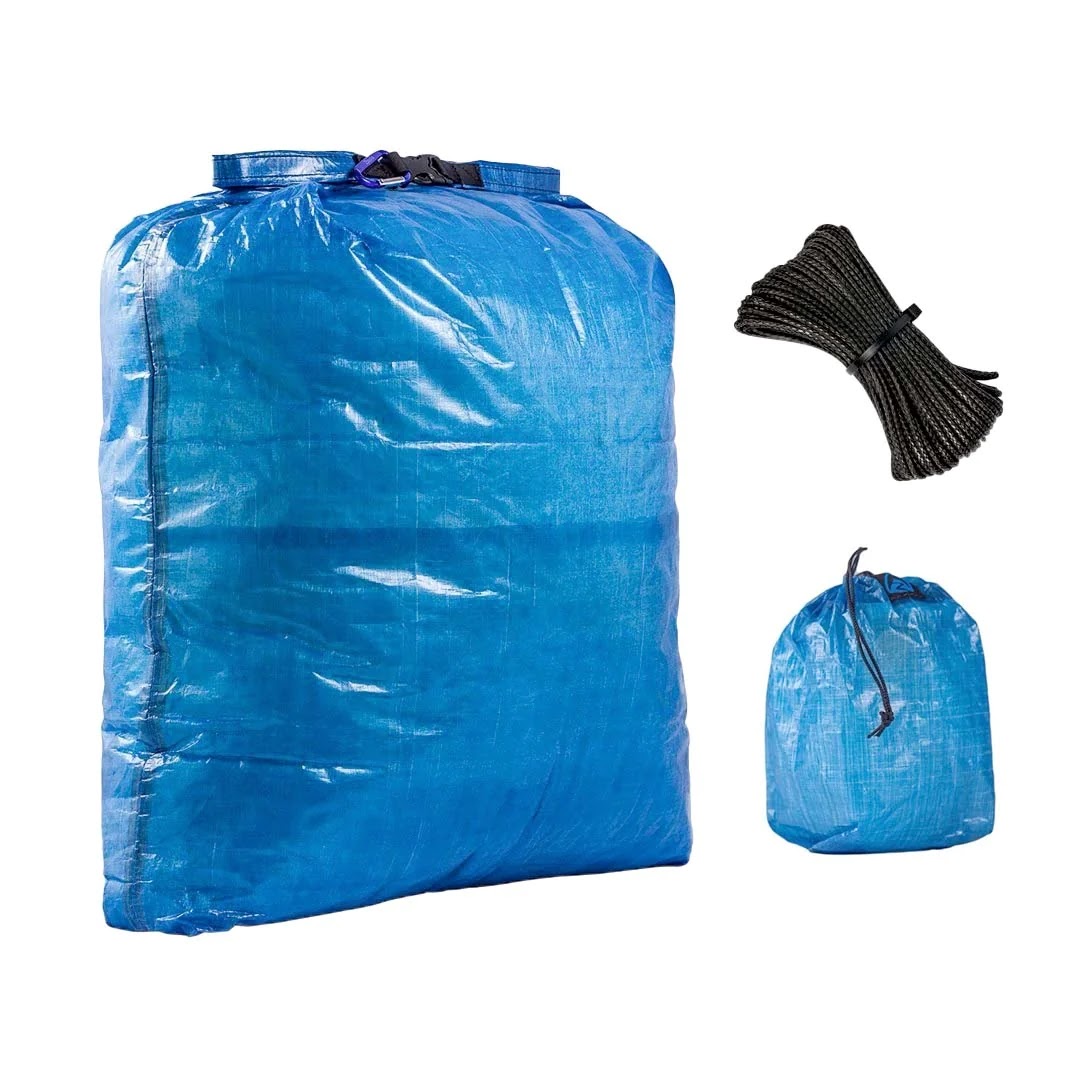
For most of my PCT hike, I carried a zPacks food bag.
This is the ultra-light solution. Weighing only 3.4 ounces, it handled the entire PCT, SHT, IAT, and multiple camping trips. The bag was awesome, but I will not use it on the AT. I’ll carry my bear canister instead.
Here is the problem with bear hanging. When you are tired — really tired — the last thing you want to do after you are done eating is hang your food. So what do you do? You use your food bag as a pillow. In the case of this light weight solution, the cordage is also very light and is constantly tangled. It also becomes quite unmanageable once it is sticky with pine sap.
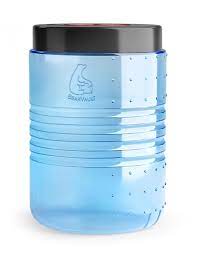
The proper thing to do is to suck it up and carry the canister. It weighs 2 lbs. 11 oz. However, a full one-liter Smart Water bottle filled weighs 2 lbs. 5 oz. On the PCT, I often had to carry three filled Smart Water bottles and I’ll never have to do that on the AT, so it is a wash. The canister also makes a fine camp chair, so it serves a dual purpose.
I’ll probably be one of the few who properly follows the rules. I’ll try not to judge the action of others.
I hiked the PCT in 2018 with a zPacks Hexamid Solo Plus. It was an outstanding tent. Its light weight allowed me to carry a more robust sleeping solution because I’m a side sleeper. That means I need more cushioning for my hips, so I carry two sleeping pads. A good night sleep is critical for a successful hike.
What I really liked about the Hexamid, was the removable bathtub. I could use the bathtub as a floor if I cowboy camped separate from the rest of the tent. I also took it out when it rained and kept it in the dry portion of my pack. When I made camp, I would put up my tent, and away from the rain I would install the bathtub. I could then strip out of my wet clothes and my tent was completely dry.
That doesn’t mean that it was perfect. It suffered from a critical zipper failure at Crater Lake. The zipper no longer properly zipped. I used some safety pins to pin up the insect netting. It wasn’t a big deal as the mosquitos were not bad in Oregon and Washington in 2018. I had on night when I set up camp at a stealth site where ants got in. Nothing wakes you up like an ant crawling on your stomach in the middle of the night!
Despite my best efforts, dirt entered into the throat of the slider so the slider was no longer able to lock the elements. Yes, backpacking teaches all the proper named of the different parts of a zipper. The top and bottom stops; the elements on the tape; and the slider. The slider has a pull tab connected to a crown with a body and the throats.
Once I was home, there were instructions on zPack’s website on how to repair the zipper and had I been in a better communication situation, I could have fixed it in the field rather easily. All I needed was a new slider and to clean the elements. I had a scissors, Tenacious Tape, and a needle and heavy duty nylon thread. I fixed it and it works fine. I also needed to fix a couple of holes in the bathtub and the fly. There are many many pokey things looking to make pin holes in your gear on the PCT. Tenacious Tape is your friend.
Regardless, a tent made with Dyneema Composite Fabric is designed for one thru-hike. All that packing and unpacking is not good for it. I still use this tent for backpacking and camping, but it is not going to last another 150 day hike.
So, as I wrote, I am deciding on a new tent. zPack’s doesn’t make the Hexamid Solo Plus anymore. It has been replaced with the Plex Solo. The Plex Solo is lighter, but has a dedicated bathtub instead of a removable one. Because of that, I started looking around at different models. The Durston Gear X-Mid Pro 1 was very intriguing to me.
The Durston Gear has a unique layout, using two hiking poles to set up, but only requires four tent stakes. My Hexamid required 10 stakes. Although neither tent has a removable bathtub, the amount of cowboy camping I’m doing on the AT is rather limited. Between the rain, condensation, and bugs, I’ll be in my tent pretty much every night.
So, that means it all comes down to the zipper. It is what failed before.
There was no documentation on the Durston Gear site about zipper repair. I asked on Reddit and received very limited feedback. Basically, I need to take better care of my gear. Well, I did take good care of my gear, but sleeping on dirt means your zipper sits in the dirt.
zPacks, on the other hand, has you covered. To fix the zipper on the Hexamid required some cutting and sewing. On the Plex Solo, the zipper slider is designed to be quickly replaced in the field. They even have a video on YouTube on how to do it.
So, when I purchase the tent, I’ll purchase an extra slider for .50-cents and I’ll be good to go.
As the two tents weight and cost the same, it comes down to which tent I can fix easily in the field. That means that the zPacks Plex Solo will be my final choice. I’ll purchase it next month or so.
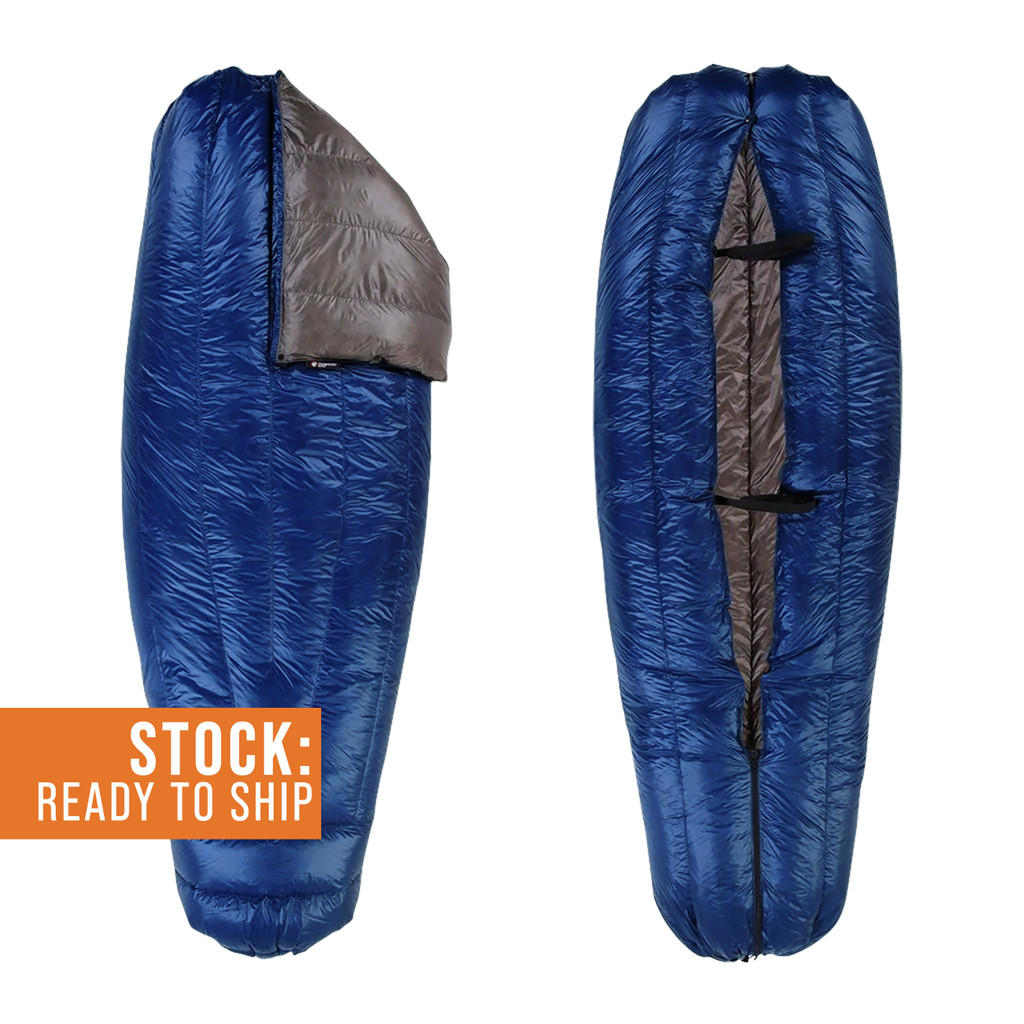
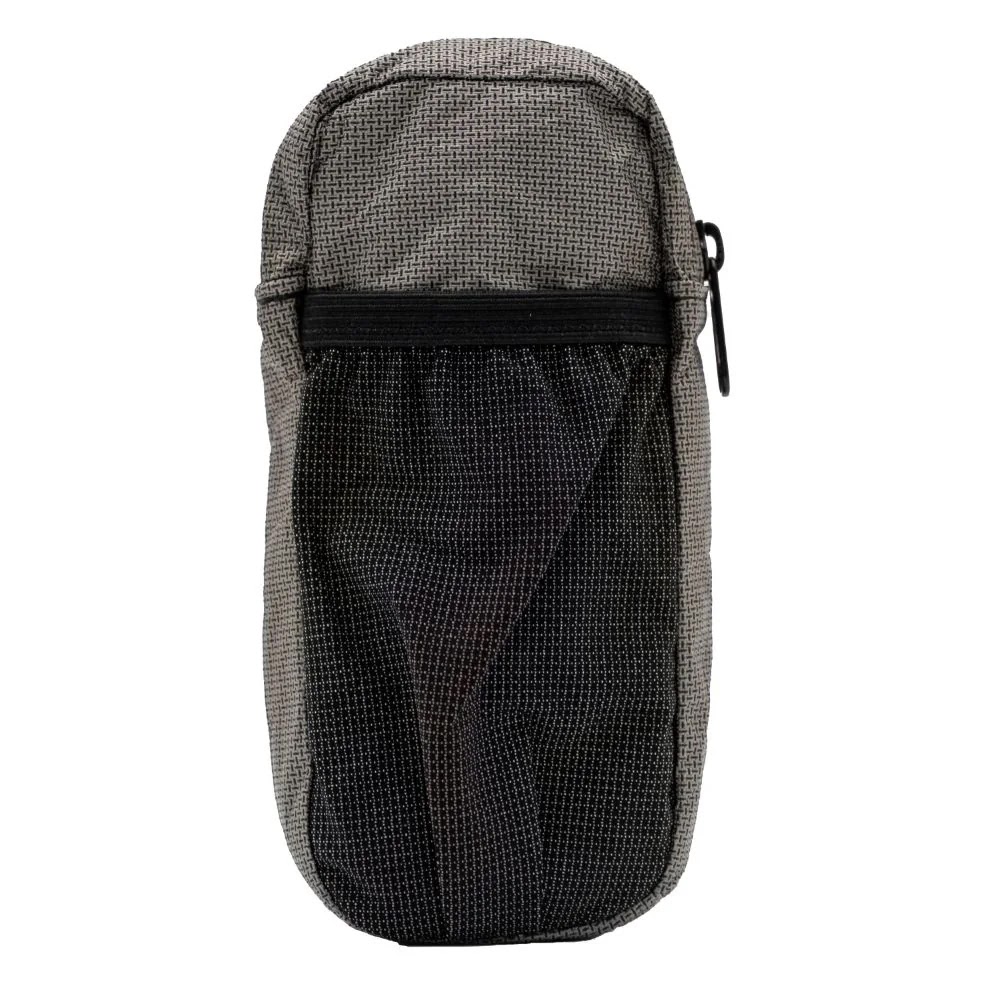
I received the pieces of gear I ordered, my new Enlightened Equipment Revelation 20-degree quilt size regular wide and my new ULA backpack pocket.
The quilt feels the same as my old one from 2016, but is much fluffier. As I wrote before, I purchased the lower quality down this time with the hope that with more fill it will not move around as much. I took a nap in it and I started to sweat. With that, I put it back in its long-term storage bag for now.
It was an opportunity to test my Thermarest Pro-Light Regular inflatable sleeping pad. It held air just fine, so it is good to go.
I also received my new shoulder pocket for my backpack. It is much bigger than the old version and easily holds my Pixel 7 with a case protector. I now have a little mesh pocket to put something in. What that will be I do not know.