Vision and Pack Modifications

As I prepared for my PCT attempt in 2018 as a middle aged hiker, I knew that the odds were against me.  With a near 90% failure rate, I would have to figure out ways to improve my odds.  I studied the trail.  I tested out different brands of shoes.  I read books on the proper care of my feet.  As astronaut Mark Watnay in the book The Martian by Andy Weir said,

In the face of overwhelming odds, I’m left with only one option. I’m gonna have to science the shit out of this.

I spent much time planning out how I was going to see on trail.  For the PCT, I wore thirty-day continuous wear contacts.  They were great.  While on trail, I would go to sleep with them still on.  When I woke up, I could see.  I carried a spare pair on contacts and a very small bottle of solution and my daughter would sent a new pair with my shoes.  I also carried a pair of glasses as a backup until I reached Big Bear when I realized that my glasses were no longer a need, but a fear.  If I lost a contact, I had a spare with me.  If I managed to loose the spare, honestly, my vision is good enough that I could follow the clearly marked trail.

When my wife and I walked the Camino in July, I wore my last pair of bifocal contacts.  In real life, I wear glasses pretty much exclusively now.  This past trip taught me that I cannot read while wearing contacts unless I have reading glasses.  So, continuous wear contacts are not an option anymore.  I’ll be depending upon the FarOut app to keep me on trail.  I need to be able to read my phone.

It wasn’t as big of a deal on the Camino.  We slept in a bed every night.  I would take out my contacts and read just fine.  On the AT, while on trail, the last thing I want to do is put my dirty fingers in my eyes at night.  I also know that there will be moments when I want the safety of contacts over glasses.  There will be climbing up mountains on my hands and knees.  I might want to go rafting on a side trip.  I need to figure out a compromise.

What I’ve decided to do is carry a couple cheap pairs of daily wear contacts for the rough and tumble hiking and wear my glasses most of the time.  I’ll need to carry two pairs of glasses, regular and sunglasses.  To keep them on if I take a tumble, I bought some cheap sport straps and I’ll carry a tiny repair kit.  

Simple enough, but there is a cascade effect to this decision.  Like I said, I feel I was successful on the PCT, because I spent time thinking about the details.  Not only do I spend time thinking about what I’m going to carry, but also where I’m going to carry it.  I’ll need two pairs of glasses if they are prescription glasses, I want easy access to them.

When you carry only the things you need, you cannot afford to loose anything.  I cringe when I see thru-hikers carrying their Sawyer Squeeze screwed on a one-liter bottle.  I want everything tucked away.  I also want to make sure that when I pack up for the day, everything has its place, and if that place has a zipper, the zipper is closed.  On the PCT, I lost just two pieces of equipment.  I lost my emergency whistle early on.  I lost my buff walking home from the laundry in Cascade Locks.  That was it.

The ULA Catalyst has two large hip belt pockets.  I bought an extra shoulder pocket when I bought the pack.  Those three locations carried anything I wanted access to without stopping.

The shoulder pocket is where I kept my phone. In the left hip belt I kept my snacks for the day.  In the right hip belt I kept those other things I wanted quick access to.  I kept my lip balm, hand sanitizer, DEET, headlamp, mosquito netting and my Rock of Faith.

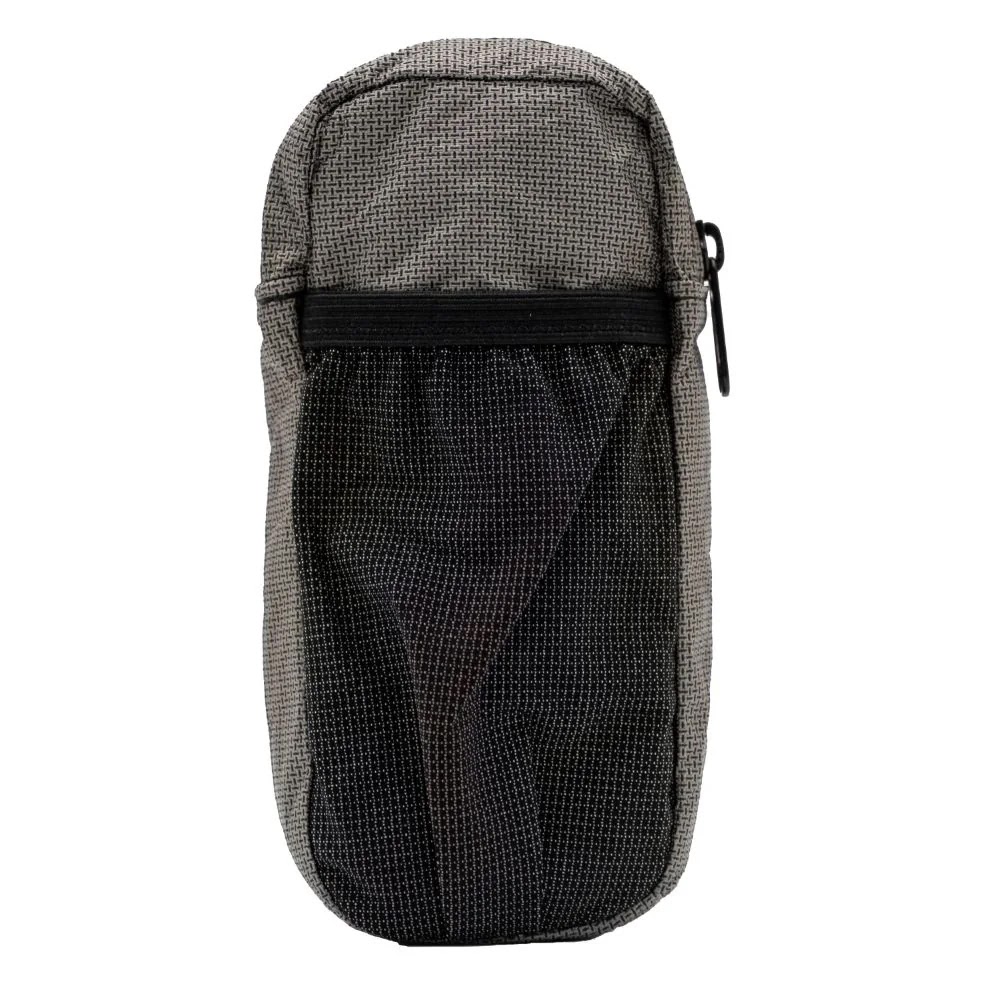
On the Camino, I didn’t need to carry snacks.  We also started hiking at the break of dawn.  Also, my phone has become larger over time and doesn’t fit well in the shoulder pocket.  So, the left hip belt became my phone pocket and I kept my sunglasses in the shoulder pocket.  On the AT, I’ll want my snack pocket back, so I need more storage, so I bought a new ULA shoulder pocket.  It is much improved from the one I bought with the pack.

The new version is bigger and has a mesh compartment.  It will become the new home for my phone and the old shoulder pocket will hold whatever glasses I’m not wearing.  Problem solved.

I know what you are thinking.  A whole article on pockets?  Absolutely!

You would think that this is no big deal, but that isn’t true.  I learned that I could cut the amount of time it took to pack up camp by nearly fifteen minutes with the simple act of carrying my toothbrush and toothpaste in a baggy in the mesh portion of my pack instead of with my food bag.  Toothpaste needs to be hung from bears, so the best place to keep it is your food bag. You store you food bag in the pack.  You cannot close your pack until everything is packed.  Brushing your teeth is usually the last thing you do before start walking.

I remember the eureka moment when I realized that if I kept my toothbrush and toothpaste outside my pack, I could be completely ready with my pack almost completely packed.  That made a huge difference when it is cold and rainy!

Sometimes it is the little things, and when you’re out in the middle of nowhere, days from civilization, it is better to think this all through before you get there.  Now I have a new mesh pocket?  What am I going to keep there?

Developing a Resupply Strategy

I could easily teach a college course on thru-hiking resupply strategies.  You can only hike as far as the calories you carry.  Getting it right is critical.  Carry too much, and you are dragging through the day.  Carry too little and you are begging other thru-hikers for food.  I fretted about resupply before I left, not knowing that I would have all day to fret about it some more once I was hiking.
On the PCT, I really only screwed up twice.  Fortunately, nether mistake turned into something critical.  
I screwed up leaving Idylwild, California.  I assumed I would be able to hike about sixteen-to-twenty miles a day.  It turns out that the combination of altitude changes, long water carries, and the intense heat meant that I struggled to hike ten-to-twelve.  I wasn’t the only one.  My two hiking partners were also out of food, so we ended up bailing early into Big Bear Lake.  It took us hours to hitch a ride into town off this seldom used road.
I also messed up at the end.  I misunderstood what a trail closure meant coming into Stehekin, Washington.  A simple sixteen mile hike into town turned into a 28+ mile day trudging through the rain and snow in the mountains.  By then, I was in excellent shape and simply pounded out the miles into Holden Village.
On the PCT, there were three types of towns.  Towns I resupplied in.  Towns I forwarded a box to prior to reaching there.  And, towns I shipped a box from home.  My daughter was my quartermaster for that hike, a role I hope she will fill for this hike.  On the PCT, I shipped one box to Warner Springs, California before I left.  My daughter resupplied me by shipping boxes all through Washington.
There is one caveat to my resupply strategy.  That was my shoes and contacts.  My shoes and contacts were shipped from home, even to towns with excellent resupply options and an outfitter.  My daughter shipped new shoes to me roughly every 500 miles and I would order a new set to home until I needed them.  For the AT, I will be wearing glasses, but I’ll still have shoes shipped as necessary.
The nice thing about the AT is that as it is the senior national trail and much more popular, resupply is much simpler.  There seem to be a ton of resupply options right on trail!  Still, I’m going to follow the same strategy for the AT as I did for the PCT.  I will resupply as I go and forward boxes as necessary, with a couple of exceptions. This should help me avoid food boredom.  There are seven places where local resupply is not really an option, based upon my initial analysis.  They are:
  1. Fontana, NC.
  2. Mountain Harbor Hostel, TN
  3. Troutdale, VA
  4. Atkins, VA
  5. Harpers Ferry, WV
  6. Duncannon, PA
  7. Monson, ME
Fontana is at mile #167, so I will ship a box there prior to me leaving.  I will have a box shipped from home for Monson.  Monson is at mile #2074, so I’ll be in tip-top shape.  They do recommend ten days of food for the One Hundred Mile Wilderness!  We will see how things go.  One thing I know is that if you did 20 miles a day on the PCT, you’ll do about 15 miles on the AT.  Looking at other peoples’ hikes, I’m going to be doing roughly 10 miles a day until Tennessee.  We’ll see how it goes.
To help me sort all of this out, I’m using two sources.  I have purchased the entire AT for Far Out.  That will be the tool I use on a day-to-day basis.  I also purchased the AT Guide.  I found a couple of peoples itineraries to help guide me as well.
Much work to do! 

Replacement Quilt Ordered


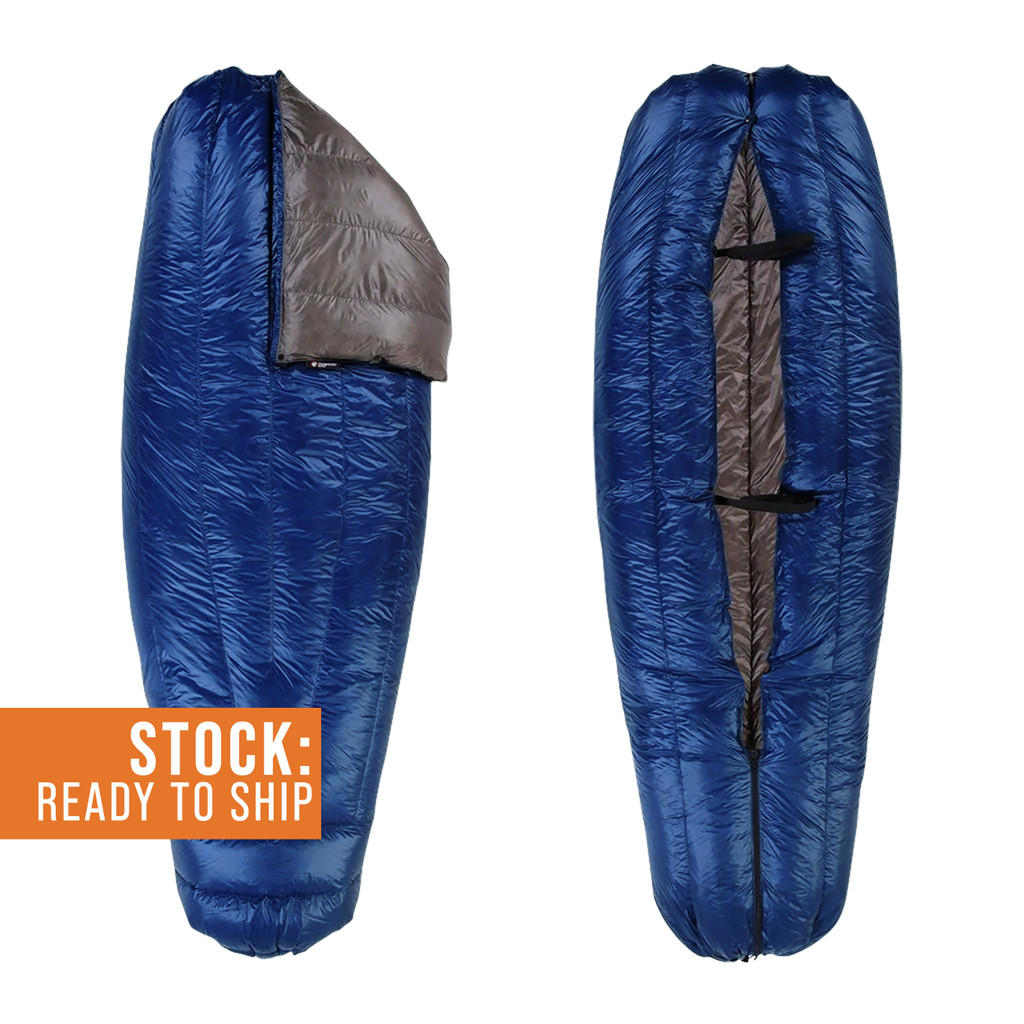
I ordered my new Enlightened Equipment Revelation quilt this morning.  It is a regular / wide 20-degree with 850P down.  My current quilt is also a regular / wide 20-degree, but it has the 950P down.  Going with 850P down increases the weight by 1.6 ounces, but cuts the cost by $90.  The total weight will be around 23.61 ounces.

Fabric wise, both quilts used 10D denier fabric which is the compromise between weight and strength.  The higher the denier, the stronger the fabric but the higher weight.  Overall, I will not be able to tell the difference between the two if it wasn’t for the different colors.

That leaves just a replacement shelter to select.

Preliminary Gear Status Part I

I certainly learned much on the trail back in 2018.  Despite nearly five-years of preparing, there is no better teacher than the trail itself.  By the time I was finished, my kit was perfect.  For the most part, my kit for the AT will be the same.  Because I bought high quality gear, they handled the hike quite well.  Still, some pieces will need to be replaced.

Without further ado, here is the preliminary gear list for my 2024 attempt of the AT.

Preliminary Gear List

Big Three

My ULA Catalyst withstood the PCT, and countless backpacking trips on the IAT (Ice Age Trail), the Superior Hiking Trail in 2021, and the Portuguese Camino this year.  There are some tears in the exterior webbing and some wear and tear where the struts meet the bottom, but other than that, it is in excellent condition.  I’ll use a trash compactor bag to create a waterproof section in the pack.

My 20-degree Enlightened Equipment Revelation is a bit lumpy now and has been relegated to a quilt to watch TV on a cold winter day.  It is still very comfortable.  Enlightened changed the sewing pattern in 2019 to prevent the down from travelling.  Unfortunately, I have the 2016 model and much of the down has travelled to the footbox.  I’ve tried fixing it according to their video instructions to no avail.  As this quilt is my last line of defense against hypothermia, I’ll replace it.

One critical piece of advice I heard before I hike the PCT was Invest in Sleep.  A good night of comfortable sleep is critical to success.  I am a middle-aged side sleeper.  I need extra padding at the hips, so a regular sleeping pad is not going to cut it.  I’ll carry my Thermarest Pro-Light Regular I used on the PCT with the addition of a Thermarest Z-Light Sol that I will fold up to give me that extra padding for my hips.  This is the same combo I carried for the PCT.  Yes, it is 33.3 ounces, but it increases my likelihood of success.

I loved my zPack Hexamid Solo-Plus on the PCT.  I loved the removable bathtub.  When it rained in Washington, I would detach the dry bathtub and carry it in the waterproof part of my backpack.  When I would set up my tent at the end of the day, I would strip out of my wet clothes and into my warm quilt with a dry floor.  Overall, the shelter handled the whole hike.  The only issue was the zippers.  They failed at Crater Lake.  Fortunately, mosquitoes were not an issue in Oregon or Washington.

When I returned home, I replaced the zippers according to zPack’s instructions.  It also has a couple of pin holes that I have patched.  It is good for a weekend trip, but not for a thru-hike of the AT.

Unfortunately, zPacks no longer makes a Hexamid with the mosquito netting.  Its replacement is the Plex Solo Tent.  The big difference is that the bathtub is not removable.  The weight of this new shelter is just 13.9 ounces.  The Hexamid Solo Plus weighed in at 19.7 ounces with the bathtub.  The other issue is the cost.  The Plex Solo is a cool $600, which is quite a bit.  There are a number of cheaper options and I have to consider that there are shelters on the AT.  I may consider a cheaper option.

Replacing the sleeping quilt with the same model is a no-brainer.  I’m still deciding on the shelter.  I know that zPacks makes excellent gear.  I just have to decide if I want to drop $600 for something I may not use if a shelter is available.  I will ponder that some more.

Appalachian Trail 2024!

I have been given the green light to attempt the Appalachian Trail starting in March of 2024!  As a middle aged hiker, my ability to crush 2,000+ miles in a single season is waning.  Still, if I hiked the PCT five years ago, there is no reason why I cannot finish the AT.

The big difference between hiking the PCT and the AT is that I know that I can do it.  When I was preparing for the PCT, I wasn’t sure I could do it.  I knew I wanted to do it, but that doesn’t mean I was physically able to do it.  Now, I know I can finish the AT in one season, assuming I don’t hurt myself or something more important doesn’t take me off trail.
I have some work to do, but not as much as I did for the PCT in 2018.  I have most of my kit already, although some of the pieces do need to be replaced.  Physically, I’m stronger than I was back in ’18, as I weightlift three times a week and do a long hike once a week.  The AT is much less stressful.  There is no wondering if I was going to get a permit, for example.
So, follow along as I prepare for this amazing adventure!