Superior Hiking Trail 2021
I attempt the Superior Hiking Trail
T-Minus Two Days
There is nothing left to do but wait. My kit is packed. My resupply boxes have been sent. Now all I can do is wait for the morning to come and I’ll hit the road.
Friday was resupply day. I shipped three boxes. One went USPS to the Two Harbors post office. I will be getting in on a Friday, so picking that up will be easy. Two were shipped via UPS. One to the very hiker friendly Claire Nelson Recreation Center in Finland, MN and one to the also very hiker friendly Sawtooth Outfitters in Tofte.
Food was pretty standard fare. I will have enough town stops to add calories if I do not have enough.
Saturday was getting everything together and packing it. The Lighterpack website is idea as a checklist to make sure I have everything. Once I was fully loaded, I put the pack on and walked down the block, wiggling as I went. I needed to adjust the internal frame as too much weight was on my tailbone. After some adjustments, it felt like an old friend giving me a hug.
That left today. Today was for honey-do’s.
Looking at the weather, it looks like some badly needed rain is coming, including some thunderstorms. That means the mosquitos will come to life, but that is a small price to pay. The drought has been bad and the land is in need of rain.
A storm has done some damage in and around Two Harbors. One report is that it took nearly four times as long to pass through one area. I’m not sure what that means. There were reports that some hikers were hiking with six liters of water due to the drought. There is still water roughly every ten miles, so that seems to be an over reaction. I will have the capacity to carry six, but I’ll never actually carry that much. In general I’ll have three liters max.
So, I’m just sitting here waiting. My heart is beating faster and honestly, I’m a bit nervous. It has been a while since I did this. Regardless, I’m ready to hit the trail.
Plan B Updated: Now With 50% Less Smell!
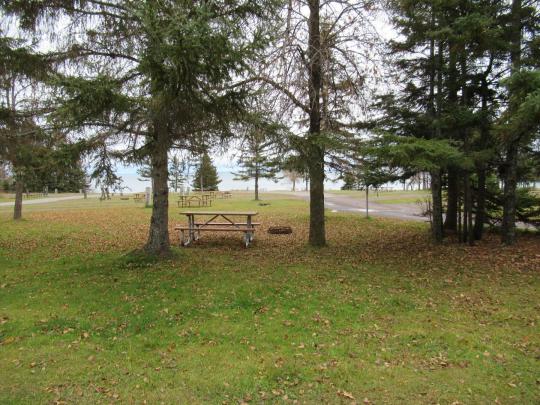
Just as I finished publishing my ‘Plan B’ post, I received a phone call from the Burlington Bay campground. Someone has cancelled their reservation at a regular site. This new location is far away from the dump station, so it is not going to smell like crap! The only stink is going to be dirty piece of hiker trash. I rather like that smell. It is the smell of freedom with a touch of awesome!
This new site also has the advantage that is has some actual privacy. Personally, I don’t care that people might look at me like I’m some kind of animal in a zoo.
I cannot tell you the number of times people came up to me to take pictures with the old thru-hiker. As I was hiking down from Timberline Lodge in Oregon when I ran into these three older women. I stopped and talked with them for a bit. When I was just about to leave, one of the women asked if she could pet my beard. It was quite foggy that day and my beard was quite epic. I said, “sure”. She did and giggled. Not creepy at all I tell you.
I don’t expect any petting of the epic beard on this hike, but I’m sure there are going to be some epic stories when I’m done.
T-Minus Six Days – Plan B
As I wrote about last time, this hike logistically is
proving to be more challenging than I expected.
The biggest factor I need to deal with is the drought. Normally, finding water is not an issue on
the Superior Hiking Trail. At most, you
are carrying two liters for ten miles.
As the average rainfall for the area is six-to-eight inches less than
normal for the year, the distances to sure water sources are farther. That means carrying more.
On the Pacific Crest Trail there were areas where water was scarce. The desert of Southern California is obvious,
but Northern California also has some long water carries. There were two helpful guides to deal with
that. The Guthooks app was updated in
real time and was the primary source I used.
There is also a team that tracks reports and saves it on a spreadsheet
called the Pacific Crest Trail Water Report.
With these two sources, I was pretty confident of the water
situation. I also knew that I needed a
liter per five miles to start. At first,
I would carry a liter plus one per five miles.
After a while, I would chug a liter before I started hiking again and
that would cover the first five miles.
The Superior Hiking Trail doesn’t have a real time app
supporting it like Guthooks. There is no
team tracking the water situation. All I
have is a guidebook that says whether a source is normally reliable and some eyewitness
reports on the SHT Facebook page.
I can deal with this.
I have a list of the sure water sources, so I will hike from sure water
source to sure water source. That is
where I run into a problem with the very first section.
I will start the hike first by taking a bus down to
Duluth. I will then need to arrange transportation
to the Martin Road Trailhead. I expect
to start hiking at roughly noon. I can
only camp at designated campsites. The
first two sites with a sure water source are at 4.9 and 6.0 miles. The next campsite is at 11.6 miles; however,
it is dry. The next site with reliable
water is 19.4 miles in. I’m not going to
be able to hike 19.4 miles on my first day when I start at noon. So, my first day is going to be six miles.
Assuming I’m hiking 15 miles a day, that gets me to my first
resupply point in Two Harbors on a Friday.
Two Harbors is six miles from the trail.
Hitchhiking is against the law in Minnesota. On top of that, everything is booked and has
been booked for some time. Ideally, I
will hike in early, resupply, shower, do some laundry, and make any adjustments. That is not possible.
If that wasn’t enough, there is a closure which is making this already unnecessarily complicated start even more complicated. Leaving Two Harbors is a five-mile road hike
and the next place to camp is roughly eight miles up trail. Doing that in a day is probably impossible when I have chores to do.
Put simply, there are no good way to navigate this speed bump. So, I posted a question on the SHT Facebook
page and surprisingly received no good answer.
As I always plan the crap out of every hike, I’ve been calculating distances in a spreadsheet. I’ve used Google Maps with the satellite mode on searching for water sources not in the guide book. No matter how I calculated it, the result was always shitty.
Today, on a whim, I decided to call the Burlington Bay campground which
is located in Two Harbors. I studied
their webpage hoping to find something for backpackers to no avail. Many campsites near a major hiking trail have a dedicated walk in site for backpackers. Alas, this one does not — at least at first glance.
They got back to me with an answer. They have one tiny campsite code named ‘Camp B’. It is in some trees near the office parking
lot. It is near the dump station, so it probably smells worse that I do when I get in. You cannot select it on the website, but it
is there.
Honestly, it is perfect. This changes everything. The math works. I take a leisure stroll towards Two Harbors. I make camp at Camp B. I take a shower. I do my laundry. I resupply. I get a large pizza and I have an easy day. The next day, clean, recharged and ready to go, I hit the trail again. It is a much better plan.
Fittingly, I’m calling this — Plan B.
Fire and Water
The big topic this week on the Superior Hiking Trail is the dry conditions on trail. The Superior National Forest has banned campfires. A number of water sources are stagnet or completely dry. This has caused a widespread panic and a number of people on the page have announced that they are cancelling their plans for this year.
As a successful PCT hiker, I know a thing or two about hot, dry conditions and long water carries. Should I worry? No. I’ll make some adjustments. First, I will add another Smart Water Bottle, increasing my carrying capacity of three liters. I will also have a two liter bladder for a dirty water bag.
There is a hiker who just finished a thru-hike and it was a struggle for him. What I don’t know is how many miles they were hiking per day. I’ve sent him a message asking for a bit of a scouting report. Hopefully that will clear things up.
tHarriet has said that The rule of thumb is that if the water source says creek or pond, it is dry. If it is river or lake, it has water. I will camel up and carry more. No big deal.
T-Minus 15 Days
So, I find myself just 15 days out from the start of this thru-hike. Here is a status update.
Resupply Strategy
I’ve narrowed down my hike into four resupply stops. The first stop will be in Two Harbors. Unfortunately, I will most likely be getting in on a Saturday. From a resupply point of view, that is not a problem. Two Harbors is the home of the SHT headquarters and they accept resupply packages for thru-hikers. The problem is that there is no place to stay in Two Harbors. Everything is booked! On top of that, it is a 6.5 mile road walk into town.
I asked about some options to deal with this situation on the SHT Facebook page, but I did not receive an answer. So, what I will do is hike into the Silver Creek campsite the night before, get up early, do my chores and resupply and start hiking again. Hopefully I can get a shower and some laundry done there.
My second resupply point will be in Finland. I’ve already contacted the Clare Nelson Recreation Center, and they are happy to receive my resupply package.
My third stop will be in Tofte. There I will send my resupply to the Sawtooth Outfitters.
My last stop will be in Grand Marais. That one is easy. It will be stored in my car.
With that settled, it is just a matter of buying food, packing it up and shipping the boxes. There are enough towns on this trip that I can pick up some extra food if I need it. The food in my pack will be the motivation to hike the miles.
Training
From a training perspective, I’ve increased the weight of my pack to 30 pounds. I’m able to keep a good pace and I do not have any soreness. I did a tweleve mile hike and went on to do errands afterwards, so I should be good.
Equipment
I had hoped to cut my base weight down another pound from where I was went I hiked the PCT (13.8 pounds). It turns out that doing that was much harder than I thought. My PCT pack was extremely well optimized. The only way I have any hope of doing that is to throw some serious money at it. I would need to replace my pack and my sleep system. That is some of the most expensive parts of my kit. So, in the end, I’m taking what I took on the PCT.
With that, I’m ready to go.
Trimming Gear Weight
As my August 3rd. SHT hike draws near, it is time to start looking at my kit and see if I can reduce some weight. I found an error in my LighterPack.com tool. I had accidentally set my down jacket quantity to zero, so my 13.7 pounds was off by 8.5 ounces. My actual kit was 14.2 pounds.
Using Grand Marias as my target, I can expect an average high of 72 degrees and an average low of 52 degrees. Perfect hiking weather! My PCT kit handled a low of 20 degrees. I probably do not need to worry about that for this hike.
Here are some items I do not need to take or have replaced.
Thermometer (0.6 oz)
I carred a small thermometer on my backpack so I would know the actual temperature. This was important because my Sawyer Squeeze cannot handle the water inside freezing. I do not need to worry about this for this hike, I do not need to take it.
Down Jacket (8.5 oz)
I should not need to worry about freezing temperatures, so my base layers and my 20 degree sleeping quilt should easy keep me warm at night.
Personal Papers (1.7 oz)
I will not be travelling into Canada, nor do I need permits to hike the PCT, so that saves 1.7 ounces of laminated paperwork.
3-Liter Platypus Bladder (1.9 oz)
I do not need the capacity to carry nine liters of water. I only used the 3-Liter bladder twice on the PCT. I will have two 1-liter Smart Water bottles and a 2-Liter Platypus Bladder which should give me plenty of capacity. The 2-Liter bladder I use for dirty water collection.
Cell Phone (0.6 oz)
I have a new cell phone. My Pixel 4a 5G weighs a whopping .6 ounces less than the Samsung Note 8 I had on the PCT.
That is it. I cut my weight from 14.2 to 13.4 pounds. To make some real weight savings, I would have to throw money at the problem. My shelter is about as light as you can get. The easiest choice is to replace my ULA Catalyst to a lighter model, but it is not worth it for a two-to-three week hike. It is something I will have to consider for when I hike the AT.
May 4th Update
Refined the Travel Plan
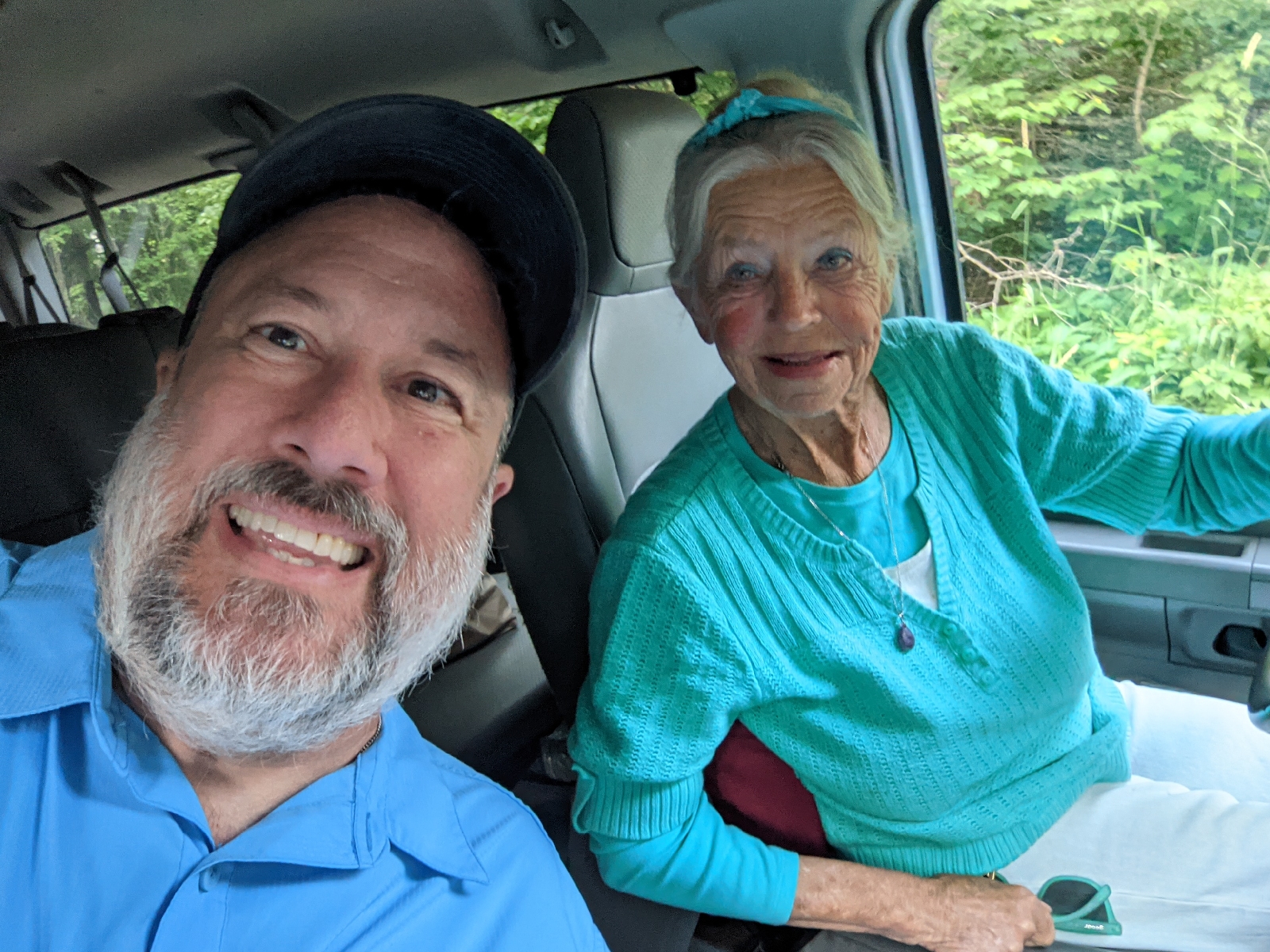
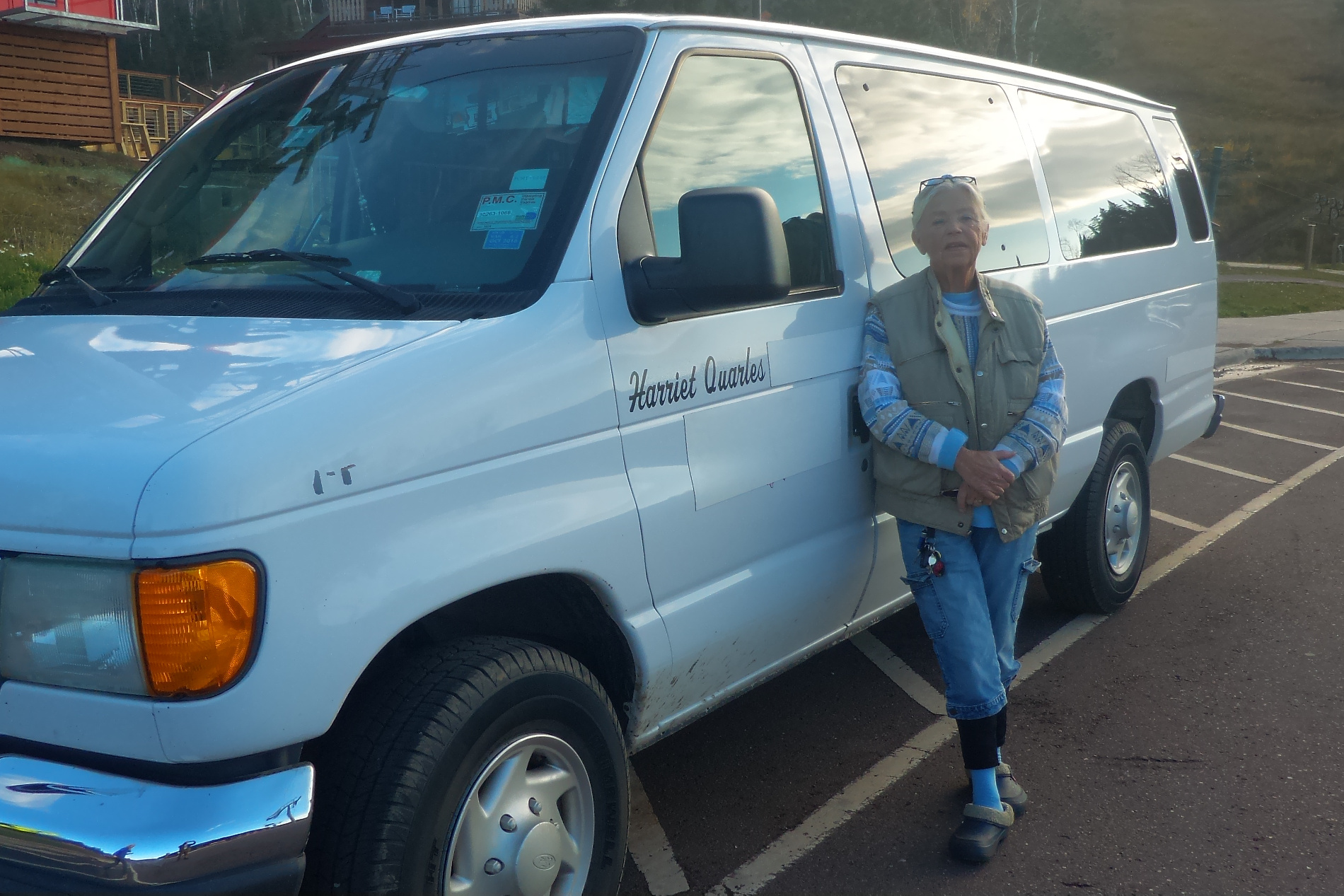
I drove up to Grand Marais from Ohio and parked my vehicle with Harriet Quarles, who’s been driving shuttles along this trail for twenty years. Harriet’s a real gem, with a wry smile and a twinkle in her eyes. She’s irreverent and hilarious. I liked her immediately.At Harriet’s kind and generous suggestion, I took an Arrowhead Transit bus from Grand Marais to Duluth. Then I took a Duluth city bus to a stop within a mile of the Martin Road trailhead, the southern terminus of my hike. The cost of these two bus rides? Zero!! I told you she was a gem.
I had read a number of posts from Harriet on the SHT Facebook group, so I reached out to her. I talked with her that evening and everything High Loon said was the same with one exception. The Arrowhead Transit bus is no longer free. It is $10.
With that I have refined my travel plan. Instead of driving to Duluth, I will drive to Grand Marais on a Monday and park my car at Harriet’s place. I’ll spend the night in Grand Marais and take the Arrowhead Transit bus back to Duluth. I’ll hike north towards Grand Marais. When I am getting close, I’ll text Harriet and get on her schedule. She will take me to the Northern Terminus and I will hike back to Grand Marais.
The only thing left that I have to do is decide which Monday I’m going and buy a ticket.
Gear Updates
Training
Resupply
Conclusion
Resupply Strategy
I have narrowed down the hike so that I will be starting at Martin Street and hiking north. When I get to Grand Marais I will be transported to the Northern Terminus. From there, I will hike back to Grand Marais. Exactly how I’ll arrange transportation is yet to be determined. Once I return to Grand Marais, my friend Terry will pick me up and take me to my car. The advantage to this route is that I will have the easier Duluth to Two Harbors section to get my hiking legs in order.
So, with that all figured out, it is time to put together a resupply plan. Fortunately, this will be way easier than the PCT.
For the PCT, I planned out thirty-two resupply points! That process was extremely complex. On the PCT, there were two types of resupply points, full-service and send a box. At full service towns I would buy my food at the local grocery store. If I had a place I needed to send a box, I would do it from there. To pull this all off, I researched each and every single town to determine what services were available. I used that strategy for all of California and Oregon.
Washington was a completely different beast. None of the town stops had a grocery store. Instead, my daughter served as my Quartermaster and shipped boxes from home. I had resupply down to a science before I reached Washington. I could easily calculate how long it would take me to complete a section. My daughter and I worked out the plan by phone and made our notes using Google Sheets.
The SHT is much simpler. I have six main resupply towns. All but one are close to the trail, and the one that is not is still easy walking distance. Food will be the heaviest item I will be carrying, so the more stops I make actually means the faster I go.
Here is the trick about resupplying. Sending a box to the Post Office is the easiest. All trail Post Offices know how to help hikers. The only issue is that the Post Office needs to be open for you to resupply. If you miscalculate you’ll be delayed for a couple of days.
Another option is local businesses. Some businesses support hikers by accepting packages, sometimes for a fee. The advantage is that local businesses have better hours. Paying $10 for someone to hold your package is much cheaper than a night in a hotel. I had great success using local business on the PCT. It is a much more flexible option.
Another choice is to completely forego sending boxes and visit the local grocery store. Hikers have created a menagerie of exotic hiker recipes like the Ramen Bomb. I’ve tried eating like that, but all I get is heartburn. The local grocery is a much better choice for fresh foods, however.
I’ve decided to split things up a bit. I will send three resupply boxes. In those boxes I will have my freeze dried dinners and a couple of items that I can only get at home. The dinners are light, so I do not mind carrying a couple of extra days of them. I’ll then shop locally for breakfast and lunch.
I’ve determined the best locations will be Two Harbors, Finland and Grand Marais. I’ll contact local businesses on the SHT website and see if they are accepting packages. I’m also ordering my dinners. They are much cheaper when you buy them in bulk.
It is good to have a plan.
Training and Preparation
When I first started backpacking, I was young and training was not an issue. As an older thru-hiker, pre-hike training is a requirement. Unfortunately, my life and my career requires sitting too much. As I followed older hikers hiking the PCT, I learned that the only real way to train to hike 10-to-12 hours a day is to actually hike 10-to-12 hours a day. Sadly, that is not realistic. I still have responsibilities.
On top of that, living in the Midwest, there is no real elevations. Yes, you can huff-and-puff up a hill, but it is nothing like a twenty mile, 5,000 foot climb, from Swarthout Canyon to Wrightwood on the PCT carrying five-to-six liters as you bake in a 100+ degree sun. Nothing can prepare you for that.
The SHT will not have anything like this, but it is still 38,000 feet of elevation change over 15-to-20 days. That is roughly 3.8 base camp to the peak of Mount Everest over a short period of time. That will be some serious work and I will not have the advantage of hiker legs.
So, I have some work to do. While every trail here is flat, that doesn’t mean this time is wasted. You can do leg exercises to strengthen you calves and quads. You can also prepare you feet. Training hikes with weight does wonders to your feet. Why not struggle with blisters before you hit the trail? That is what I did for the PCT and that is what I’m doing with the SHT.
For leg exercises, I try and do 1,000 calf lifts and 500 squats every day. I also try and hike a nine mile hike with a weighted backpack. Before I left for the PCT, I was able to maintain a non-stop nine mile hike at a 3.5 mph pace with a 45 pound backpack. I probably only carried a 45 pound backpack a couple of times on the PCT. Generally, I was around 20 to 25 pounds.
Now that it is warm out and it is not icy, I’ve been taking regular walks of 8-to-9 miles and slowly increasing my weight. I’m up to 25 pounds. On the weekends, my wife and I try and knock off segments of the Ice Age Trail.
I won’t be at that level of shape for the SHT, but I will be good for 15 miles a day comfortably. Maybe I’ll even surprise myself.